
Could Secret Aerospace Technology Already Exist?
Have you ever looked up at the sky and seen something that defied explanation? A light moving faster than any known aircraft, changing direction without any visible means of propulsion,
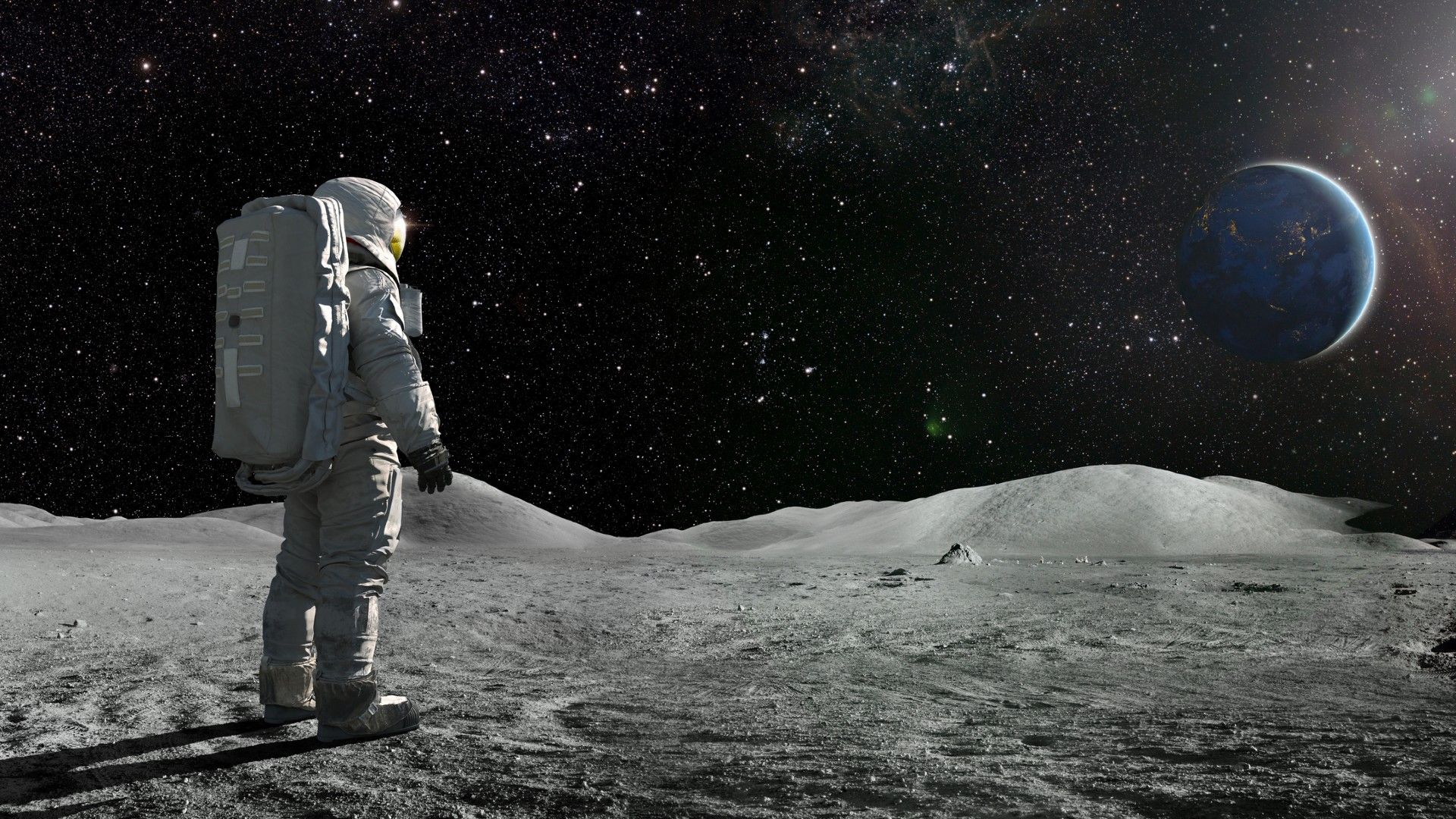
Have you ever looked up at the night sky, watched the Moon glowing silently, and wondered what it would be like to call that place home? To step outside your front door, look up, and see Earth hanging in the blackness above you?
It sounds like something straight out of a science fiction novel, a dream reserved for distant futures and Hollywood blockbusters. But here’s the thing that might surprise you: that future isn’t as far away as you think. We are standing at the very edge of a new era, an era where colonizing the moon is shifting from a wild fantasy to an urgent, tangible goal.
But in our excitement, we must pause and ask the most important question of all: are we truly ready for the monumental challenge of humans living in a moon colony? To truly understand the answer, we must first explore could humans really build colonies on the moon? and what it would actually take to turn this dream into reality.
For decades, our lunar ambitions were defined by short visits. The Apollo missions were incredible feats of courage and engineering, but they were essentially camping trips. We planted a flag, collected some rocks, and came home. The vision for a permanent base is fundamentally different.
We are talking about a permanent foothold, a place where people don’t just visit, but live, work, and even raise families. This is about becoming a multi-planetary species, and the Moon is our first, most logical stepping stone. This vision is being driven by a powerful combination of science and survival.
The Moon is a treasure trove of scientific data, holding secrets to the history of our solar system. But it’s also a testing ground. If we can learn how to survive on the moon for extended periods, we can apply that knowledge to the even more daunting challenge of reaching Mars.
Lunar colonization offers us a chance to develop and perfect the technologies we will need to spread our wings further into the cosmos. To build a sustainable future among the stars, we must first see the major survival problems future moon civilizations may encounter and understand how to overcome them.
So, what would this new world actually look like? It certainly won’t be a bustling city with skyscrapers and cars right away. The early stages of moon colony infrastructure will be far more pragmatic, focused on survival and functionality. The first step involves sending robotic precursors to scout locations and begin basic construction.
The leading candidate for a base is the lunar South Pole, a region prized for its unique conditions. There are areas here that enjoy near-perpetual sunlight, which is crucial for a sustainable power supply, and permanently shadowed craters that are believed to hold vast reserves of water ice.
Construction itself will be a monumental undertaking. Instead of hauling heavy materials from Earth, we will use the local resource: moon colony infrastructure will be built using lunar regolith, the layer of loose, dusty soil that covers the Moon’s surface.
Scientists are already developing 3D printing techniques that can melt this dust with concentrated sunlight and print building blocks, creating protective shells over inflatable habitats. This approach isn’t just efficient; it’s essential for survival. A thick layer of this printed regolith will serve as a shield against the constant bombardment of micrometeorites and the deadly cosmic radiation that bathes the lunar surface.
As we push forward with these ambitious plans, we must also discover how artificial intelligence could shape future societies in space, weighing how it could both help and hinder our off-world ambitions.
It’s easy to get lost in the romance of colonizing the moon, but the romance quickly fades when you confront the sheer brutality of the lunar environment. This is not a vacation destination. It is one of the most hostile places in the known universe, and the list of moon colony challenges we must overcome is staggering.
Let’s start with the most existential threats. Our Earth has a magnetic field and an atmosphere that protect us from harmful solar and cosmic radiation. The Moon has neither. The surface is bathed in constant, dangerous radiation that can cause severe health problems, including cancer.
Astronauts on the Moon will be exposed to radiation levels far higher than on the International Space Station. This means our habitats won’t just be homes; they will be fortresses. On top of the radiation, the temperature swings are mind-boggling. At the lunar equator, temperatures can soar to a blistering 130°F (54°C) in the sunlight and plummet to a terrifying -334°F (-203°C) in the shade.
This 500-degree swing creates immense stress on every piece of equipment, requiring incredibly sophisticated heating and cooling systems to protect both the colonists and the technology they rely on.
If you think radiation is the biggest problem, think again. The real, silent enemy of a lunar base might just be something we take for granted on Earth: dust. Lunar dust, or regolith, is nothing like the smooth particles we are used to. Because there is no wind or water to erode them, these particles are sharp, jagged, and incredibly abrasive. Imagine billions of tiny, microscopic shards of glass that cling to everything.
This “lunar dust” is also highly electrostatically charged by solar radiation, making it stick to spacesuits, equipment, and solar panels like a magnet. This can cause mechanical failures, seal breaches, and even become a health hazard if inhaled. We need to develop new materials, filtration systems, and cleaning methods just to manage it.
One of the most persistent moon colony challenges is keeping this invisible enemy out of the habitats to ensure the safety of both astronauts and machinery.
The most complex part of humans living in a moon colony is arguably the moon colony ecosystem. We can’t just bring a lifetime supply of air and food; it’s too heavy and expensive. Instead, we have to build a “closed-loop” system. This is where the science gets very interesting.
The concept is a miniature Earth, an artificial moon colony ecosystem that recycles everything. We need a Bioregenerative Life Support System (BLSS). Think of it like a giant terrarium. Plants would be grown in greenhouses to provide food and generate oxygen. Algae in photobioreactors can purify water and produce oxygen.
Even human waste would be recycled, processed into fertilizer to grow more plants and generate methane for energy. This creates a survival beyond Earth system that is self-sustaining. Here on Earth, the “Lunar Palace 365” mission successfully simulated a system that recycled 98.2% of its materials, proving that this technology is viable.
It’s a profound shift in mindset: to live on the Moon, we must first become masters of circular, sustainable living.
Despite all these monumental hurdles, the potential for life on a lunar base is an inspiring thing to imagine. Once the initial survival infrastructure is in place, the colony will begin to evolve.
The concept of life inside a moon colony will be centered around underground or buried habitats to provide that essential radiation shielding. These won’t be cramped, dark caves, but rather spacious, modular complexes. Designers are already envisioning multi-tiered habitats with different pressure zones, allowing for large, open spaces filled with plants and natural light filtered through water shields.
The goal is to not just ensure survival, but to foster psychological well-being. Access to natural light, greenery, and community spaces will be vital for the mental health of people living so far from home. The economy of a lunar colonization effort will eventually transition from being purely state-funded to supporting commercial activities.
We will see resource extraction, particularly of Helium-3 for use in future fusion reactors, and scientific research facilities that draw talent from across the globe. The Moon will become a hub of innovation and a launchpad for deeper space exploration. It will be a place where we test the limits of our own biology and the capabilities of our technology.
The most complex part of humans living in a moon colony is arguably the moon colony ecosystem. We can’t just bring a lifetime supply of air and food; it’s too heavy and expensive. Instead, we have to build a “closed-loop” system. This is where the science gets very interesting.
The concept is a miniature Earth, an artificial moon colony ecosystem that recycles everything. We need a Bioregenerative Life Support System (BLSS). Think of it like a giant terrarium. Plants would be grown in greenhouses to provide food and generate oxygen. Algae in photobioreactors can purify water and produce oxygen.
Even human waste would be recycled, processed into fertilizer to grow more plants and generate methane for energy. This creates a survival beyond Earth system that is self-sustaining. Here on Earth, the “Lunar Palace 365” mission successfully simulated a system that recycled 98.2% of its materials, proving that this technology is viable.
It’s a profound shift in mindset: to live on the Moon, we must first become masters of circular, sustainable living. For those hungry for more inspiration, explore visionary stories about life beyond Earth that capture the imagination and push the boundaries of what we believe is possible.
The biggest challenge isn’t a single problem, but a combination of them. The top three are arguably: cosmic radiation, which requires heavy shielding and causes long-term health risks; the abrasive, static lunar dust that damages equipment and poses health hazards; and the extreme temperature swings, which test the limits of engineering. Overcoming these core issues is the key to survival beyond Earth.
No. The Moon has virtually no atmosphere, meaning there is no breathable air. Any human living on the Moon would need to live inside a pressurized, sealed habitat or wear a spacesuit at all times when outside. The primary source of oxygen will come from extracting it from lunar soil or from water ice.
The South Pole is the prime location for several reasons. It has areas called “Peaks of Eternal Light” that receive near-constant sunlight, which is critical for solar power. It also has permanently shadowed craters that are believed to contain large deposits of water ice, which is essential for drinking, producing oxygen, and making rocket fuel. This combination of resources makes it the most viable location for moon colony infrastructure.
A moon colony ecosystem would be largely based on a bioregenerative life support system (BLSS). This involves growing plants indoors in hydroponic or aeroponic greenhouses. Lunar soil (regolith) would be treated with human waste to make it fertile for crops. The plants would produce food and oxygen while recycling carbon dioxide. This closed-loop system is vital for humans living in a moon colony for extended periods.
So, could humans really build colonies on the Moon? The answer isn’t a simple yes or no. It’s a resounding “we are trying.” The vision is clear, the blueprints are being drawn, and the technology is advancing at an incredible pace. We are tackling the immense moon colony challenges head-on, from developing radiation-proof habitats to creating closed-loop ecosystems. The path forward is fraught with peril and will require an unprecedented level of global cooperation and ingenuity.
We are literally learning to build a life-sustaining bubble in a dead and hostile world. But the potential rewards are immeasurable. The skills and technologies we develop for this mission will have profound benefits for life on Earth. More than that, colonizing the moon is about the spirit of exploration, the desire to push our boundaries, and the audacious dream to ensure the long-term survival of humanity.
This isn’t just a story for the distant future. The wheels are in motion. We are on the precipice of a new age of discovery. As we look up at the Moon now, we are not just looking at a rock in the sky; we are looking at our future home.
Have you ever looked up at the sky and seen something that defied explanation? A light moving faster than any known aircraft, changing direction without any visible means of propulsion,

Have you ever looked up at the night sky, spotted that tiny red dot glowing among the stars, and wondered what it would be like to stand on its dusty
Imagine stepping onto a gleaming space station, the vastness of the cosmos stretching before you, only to realize that every decision, every movement, every whispered word is being monitored, analyzed,
Imagine a sky where the roar of jet engines is replaced by the silent hum of plasma thrusters. Imagine a battle fought not over oceans and mountains, but across the