
Could Secret Aerospace Technology Already Exist?
Have you ever looked up at the sky and seen something that defied explanation? A light moving faster than any known aircraft, changing direction without any visible means of propulsion,

Have you ever looked up at the night sky, spotted that tiny red dot glowing among the stars, and wondered what it would be like to stand on its dusty surface? To feel the thin, freezing wind against your face, to watch two tiny moons racing across the alien sky, and to know that Earth is nothing more than a pale blue dot in the distance?
This dream has captured the human imagination for generations. But here is the uncomfortable truth that science fiction often skips over: surviving on Mars is not just difficult. It is one of the most dangerous, unforgiving, and complex endeavors humanity has ever attempted.
The Red Planet does not welcome us. It is a frozen, radiation soaked desert with an atmosphere so thin it might as well not exist. Every breath we take, every step we make, and every moment we spend there will be a battle against an environment that is fundamentally hostile to human life.
So let us pull back the curtain and confront the brutal reality of surviving on Mars and ask ourselves a question that demands an honest answer: are we truly ready for what awaits us? To understand the full scope of this monumental undertaking, we must first explore could humans really build cities on mars? and what it would actually take to turn this dream into a sustainable reality.
Mars is often romanticized as Earth’s twin, a world of towering mountains and vast canyons where humanity can start fresh. But the reality is far more sinister. The planet is a frozen wasteland where temperatures can plunge to a bone shattering minus 100 degrees Fahrenheit at night.
The atmosphere is so thin that it provides almost no protection from the sun’s deadly radiation. The soil is laced with toxic perchlorates that can damage human organs and disrupt thyroid function. The dust storms can rage for months, blanketing the entire planet in a shroud of fine, abrasive particles that clog equipment and block out the sun.
This is not a new home waiting to be claimed. This is a fortress that must be conquered through sheer human will and ingenuity. The challenges of Mars exploration begin the moment we leave Earth’s orbit and do not end until the moment we return. Every system on a Mars mission must be designed with redundancy, every decision must account for the unforgiving environment, and every failure must be anticipated and mitigated.
The margin for error is zero. This is the harsh reality of deep space survival that we must confront before we can even think about building a permanent presence on the Red Planet.
Before we can even think about surviving on Mars, we have to survive the journey to get there. The trip takes approximately six to nine months, depending on the orbital alignment. That is half a year trapped in a metal box smaller than a studio apartment, hurtling through the void at tens of thousands of miles per hour.
And the dangers are not just psychological. Throughout this journey, astronauts will be exposed to space radiation exposure at levels far beyond anything experienced on the International Space Station. Without Earth’s protective magnetic field, they will be bombarded by solar particles and cosmic rays that can damage DNA, increase cancer risk, and impair cognitive function. The longer the journey, the greater the risk.
Then there is the issue of microgravity. The low gravity health effects of extended spaceflight are well documented. Muscle atrophy, bone density loss, fluid shifts, and vision problems are just the beginning. Even with rigorous exercise regimens, astronauts will arrive on Mars physically weakened and potentially suffering from long term health consequences.
The psychological toll is equally concerning. Isolation, confinement, and the constant awareness of being millions of miles from home can take a severe toll on mental health.
The challenges of surviving on Mars are immense, and yet we continue to push forward. We are driven by a spirit of exploration, a desire to expand our horizons, and a belief that humanity’s destiny lies among the stars. But we must be honest about what we are getting into.
The first settlers on Mars will face dangers that no human has ever faced before. They will live in constant fear of system failures, radiation poisoning, and the psychological toll of isolation. They will be millions of miles from home, with no hope of rescue if something goes wrong.
And yet, they will go because they believe in something greater than themselves. To truly understand what awaits these brave pioneers, we must look at what life on Mars might look like in the future and the sacrifices that will be required to make it a reality.
The path to Mars colony survival is long, difficult, and uncertain. While the goal may seem distant, every successful step begins with smaller milestones. Before attempting a permanent settlement on Mars, scientists believe we must first explore whether humans could realistically establish permanent lunar colonies, allowing us to test life-support systems, habitats, and long-term survival strategies much closer to Earth. These lessons will play a vital role in developing oxygen production, overcoming low-gravity health effects, and preparing humanity for sustainable life on the Red Planet.
We must also address the low gravity health effects through exercise, medication, and possibly even artificial gravity systems. The deep space survival techniques we develop for Mars will also benefit missions to the outer solar system and beyond.
The dream of surviving on Mars is not just about planting a flag and claiming territory. It is about ensuring the long term survival of our species. It is about spreading our wings and becoming a multi-planetary civilization. It is about the indomitable human spirit that refuses to be confined to a single world.
The road ahead is paved with challenges, but it is also paved with hope. And hope is the most powerful force we have. For those who want to experience the grit and determination of this journey, there is no shortage of realistic Mars survival fiction that captures the struggle and triumph of humanity’s greatest adventure.
The biggest danger is likely the combination of space radiation exposure and the psychological toll of isolation. Radiation causes long term health damage that accumulates over time, and the psychological pressure of living millions of miles from Earth with no hope of rescue can be overwhelming. These two factors make surviving on Mars a constant battle against both physical and mental degradation.
Humans would rely on oxygen production on Mars through electrolysis. The Martian atmosphere is 95% carbon dioxide, which can be split into oxygen and carbon monoxide using specialized equipment. This technology has already been tested on NASA’s Perseverance rover and represents one of the most critical systems for any Mars colony.
The low gravity health effects include muscle atrophy, bone density loss, fluid shifts, vision problems, and potential cardiovascular issues. Long term exposure to space radiation exposure also increases cancer risk and can impair cognitive function. These health challenges are among the most significant dangers of living on Mars.
The dream of surviving on Mars is one of the most ambitious and inspiring goals humanity has ever pursued. It represents our desire to explore, to expand, and to ensure the long term survival of our species. But the path to this dream is fraught with danger, sacrifice, and uncertainty.
The challenges of Mars exploration are not just technical problems to be solved. They are fundamental tests of our courage, our ingenuity, and our ability to work together. We must confront the dangers of living on Mars with honesty and determination, knowing that every step forward will be a struggle.
But we must also remember why we are doing this. We are doing this because we are explorers. We are doing this because we refuse to be limited by a single world. We are doing this because the human spirit cannot be contained. The future is not written yet. It is being written right now, by every scientist, engineer, and dreamer who refuses to give up on the Red Planet.
The challenges are immense, but so is our determination. And that determination is what will ultimately carry us to the stars.
Have you ever looked up at the sky and seen something that defied explanation? A light moving faster than any known aircraft, changing direction without any visible means of propulsion,
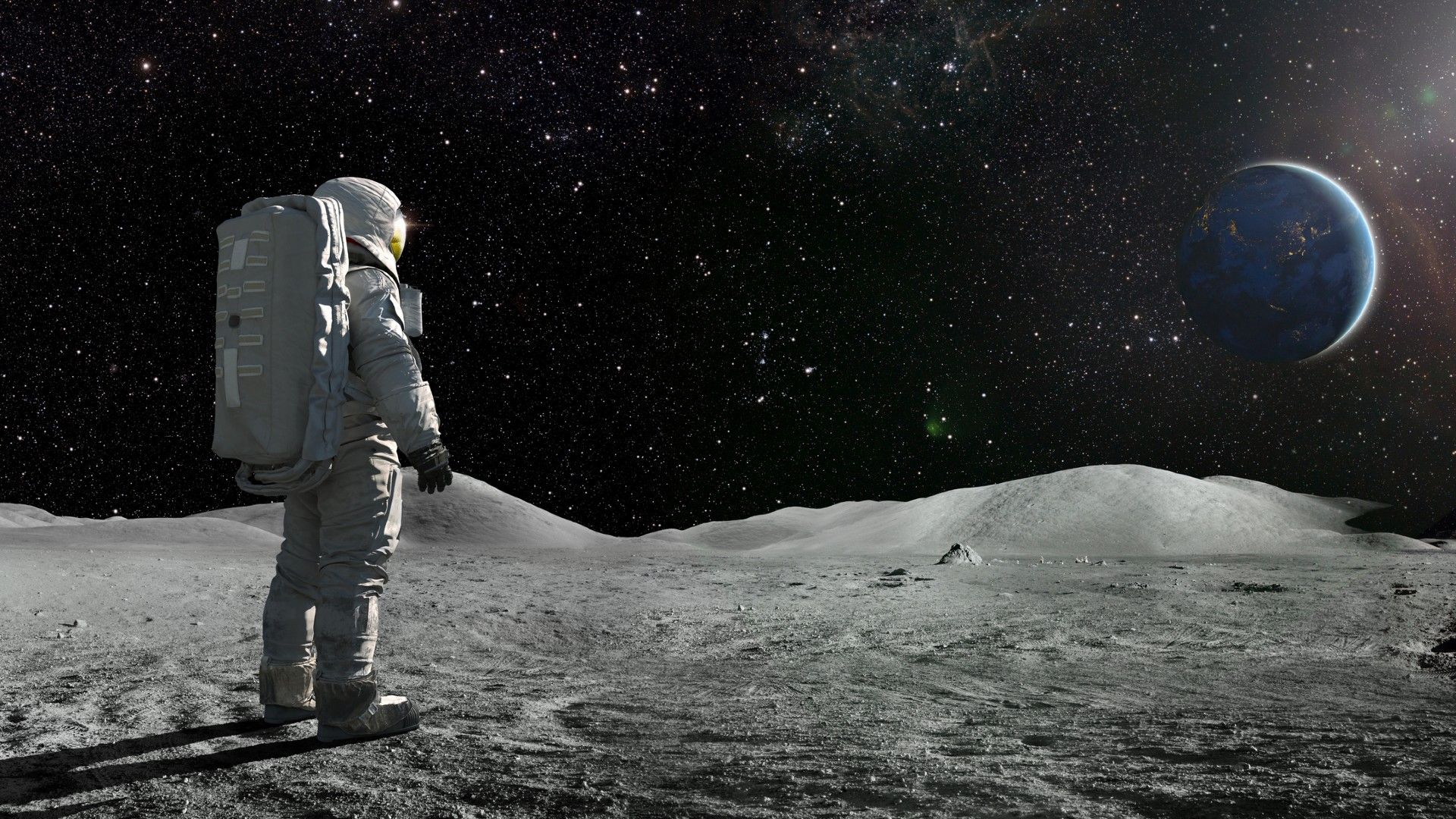
Have you ever looked up at the night sky, watched the Moon glowing silently, and wondered what it would be like to call that place home? To step outside your
Imagine stepping onto a gleaming space station, the vastness of the cosmos stretching before you, only to realize that every decision, every movement, every whispered word is being monitored, analyzed,
Imagine a sky where the roar of jet engines is replaced by the silent hum of plasma thrusters. Imagine a battle fought not over oceans and mountains, but across the